For the Mod 1 project, the problem posed is as follows: Your team is charged with doing data analysis and creating a presentation that explores what type of films are currently doing the best at the box office. You must then translate those findings into actionable insights that the CEO can use when deciding what type of films they should be creating.
Using one dataset that was provided, as well as finding a dataset on Kaggle.com, I decided to focus on recent movies, from 2009-2019. Combining these datasets using Pandas, I did profit margin calculations and also created some more palatable number visualizations without scientific notation for the presentation.
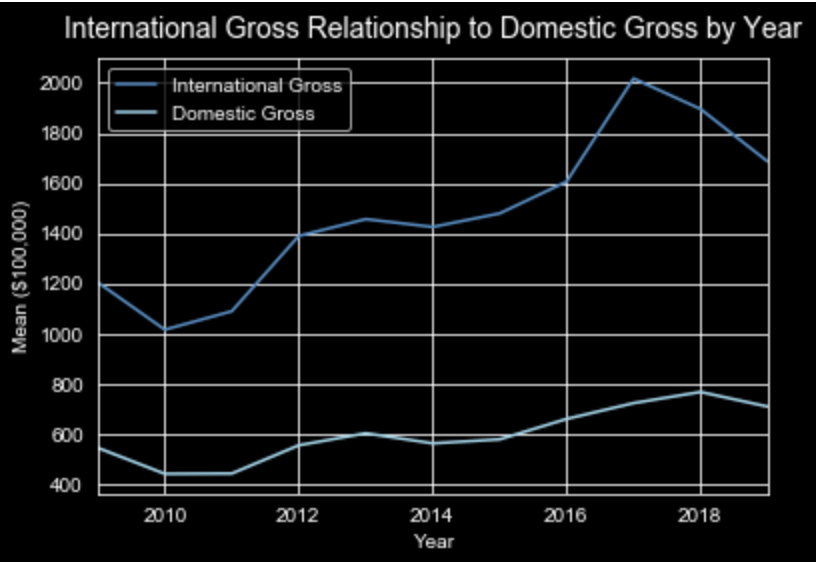
As I am analyzing the potential for success, and money is key for most corporations, I focused on domestic gross, because it directly correlates with the international gross, and should be accurate as far as the predictions and assessments made here.
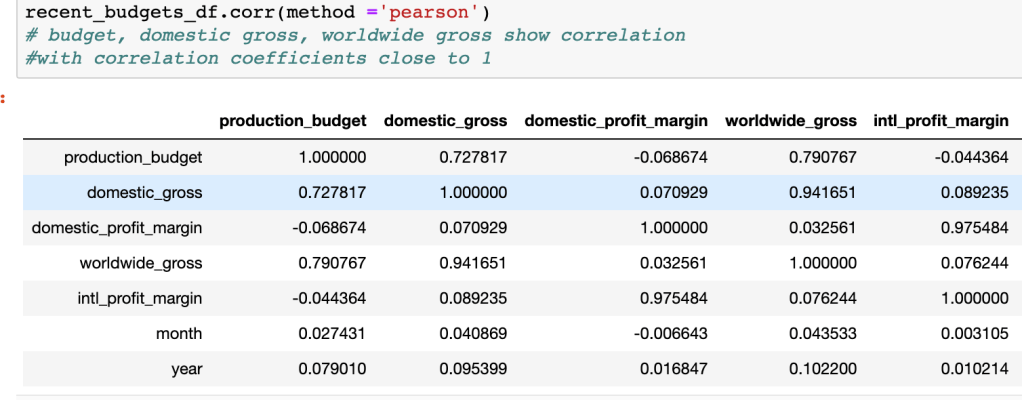
As you can see, the correlation coefficient (using the Pearson method), is 0.94(yes, I am rounding here), which shows a strong relationship. Additionally, you can see that the production budget and domestic gross show a correlation coefficient of 0.73(rounding, again), which shows a moderately strong correlation, so it makes sense that the international gross(also known as worldwide gross here), shows a 0.79 correlation coefficient, which shows an even stronger correlation, which makes sense since the international and domestic grosses show a positive correlation.
After cleaning and combining several datasets, I opted on the two mentioned above, as with their powers combined, I had (or at least thought/hoped I had) everything I needed to complete the analysis that I was aiming for.
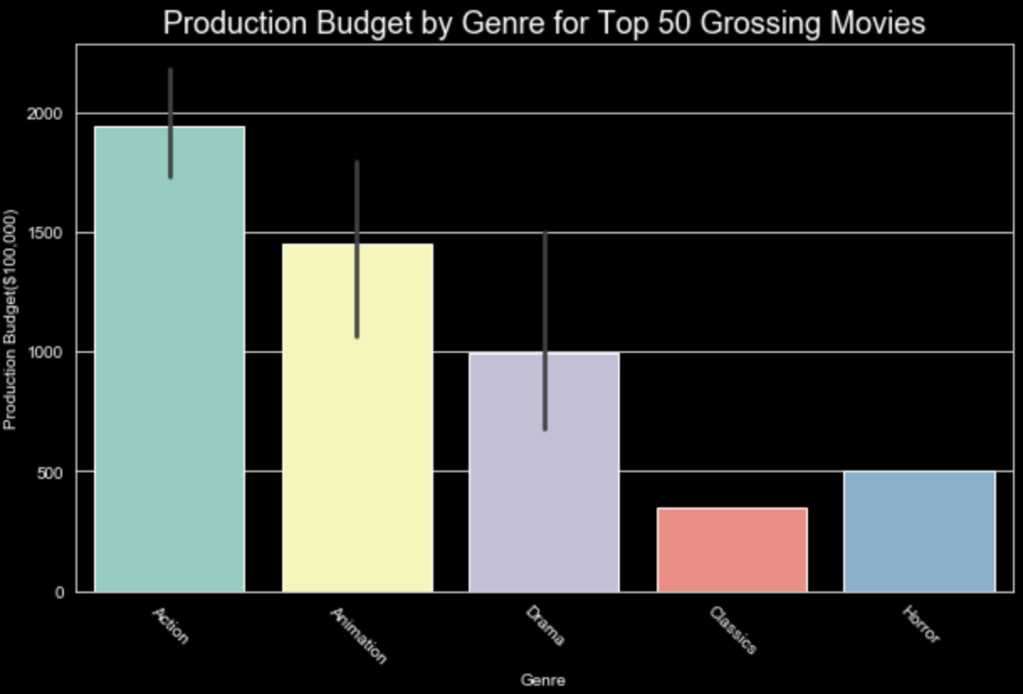
Defining success involves monetary earnings. Therefore, I assessed the profit margin, as the production budget for film making has a large range as shown here.

The production budget inevitably affects the gross, as the more spent on a production, the more has to be made at the box office to cover the costs before profits can be earned. The production costs come from the production company starting during pre-production, and if the movie doesn’t do well, but it cost millions of dollars to create, then the production company is at a deficit. But if the movie costs less to make, but is successful at the box office, then the company will be earning revenue much more quickly.
The highest grossing movies in the U.S. do not necessarily make the most profit for a company. As you will see here, action movies tend to earn the highest gross numbers at the box office. The following graphs were created using the top 50 domestically grossing movies from the 2009-2019 dataset. Some of the movies from this subset include the following:
Avatar, Black Panther, Avengers: Infinity War, Jurassic World and Incredibles 2.

These movies make billions and millions at the box office. However, they do not have a high profit margin, due to high production budgets.
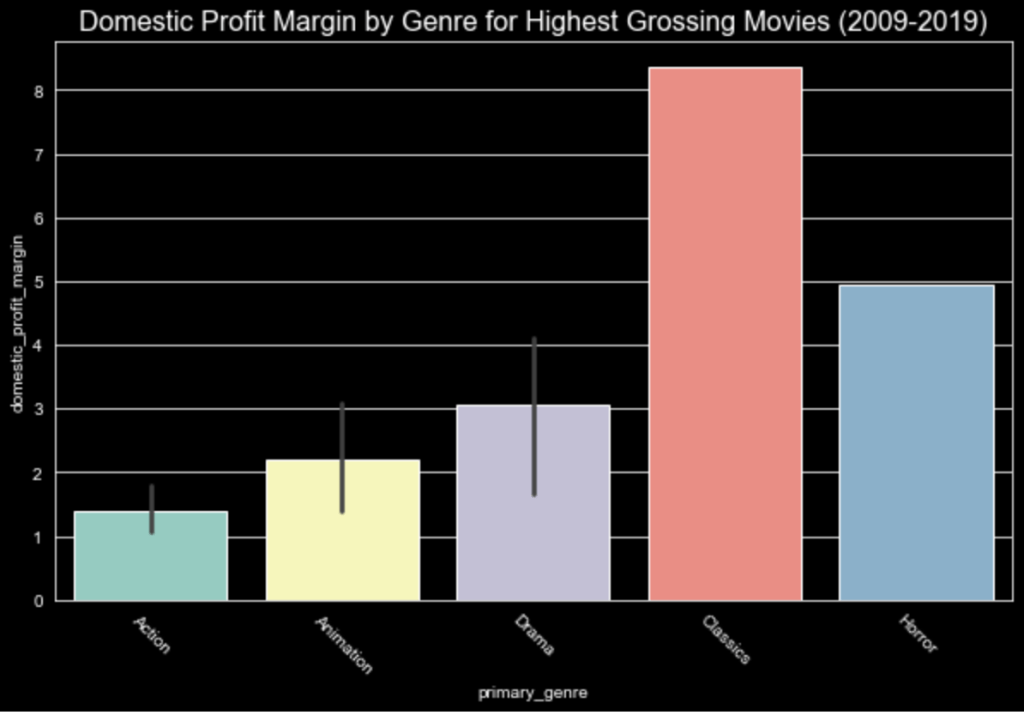
I then checked the 50 most profitable movies using the 50 movies with the highest profit margin from the 2009-2019 dataset, and found that the genres that tend to make the most profits for a company are not the same as the highest grossing genres.

Additionally, these movies do not bring in the same amount of revenue as the high grossing movies(by definition, obviously).

The profit margin is high here because of low production costs. Examples of movies included in this subset of data are as follows:
Paranormal Activity, Get Out, The Devil Inside, Paranormal Activity 2, Unfriended, and The War Room
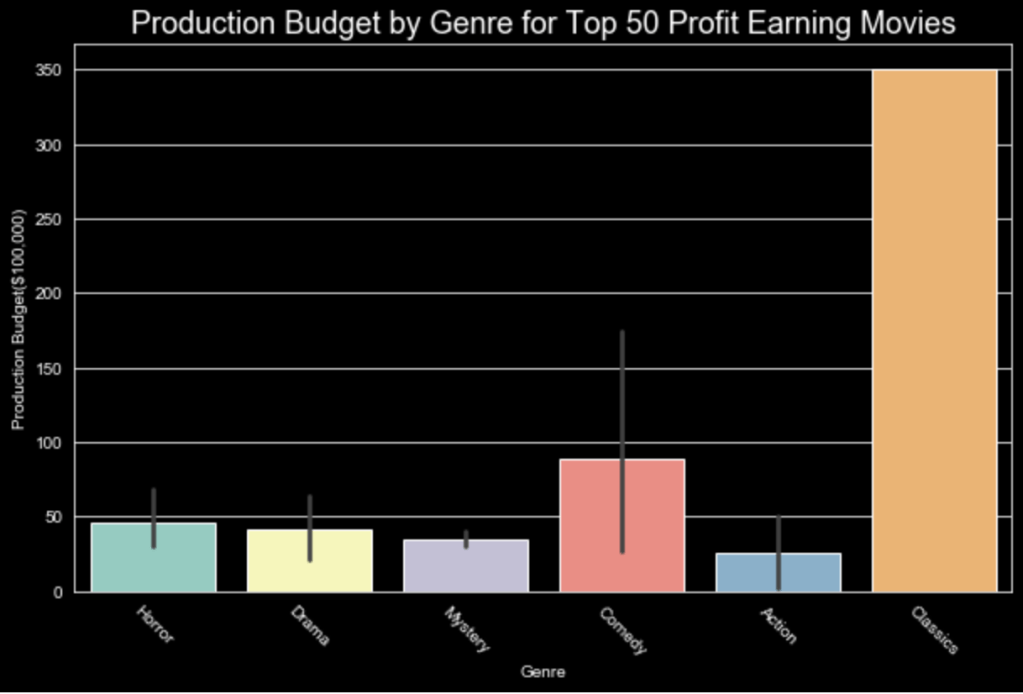
Depending on the way success is determined by a production company, this can dictate the types of movies that should be invested in.
Personally, I am all for more well written low budget horror films. Further assessment is required to get the ins and outs of creating a low budget movie that will sell a lot of tickets. Even more research is required to assess how to create a movie that will not only make profits, but be appealing to audiences.
 Data Insights